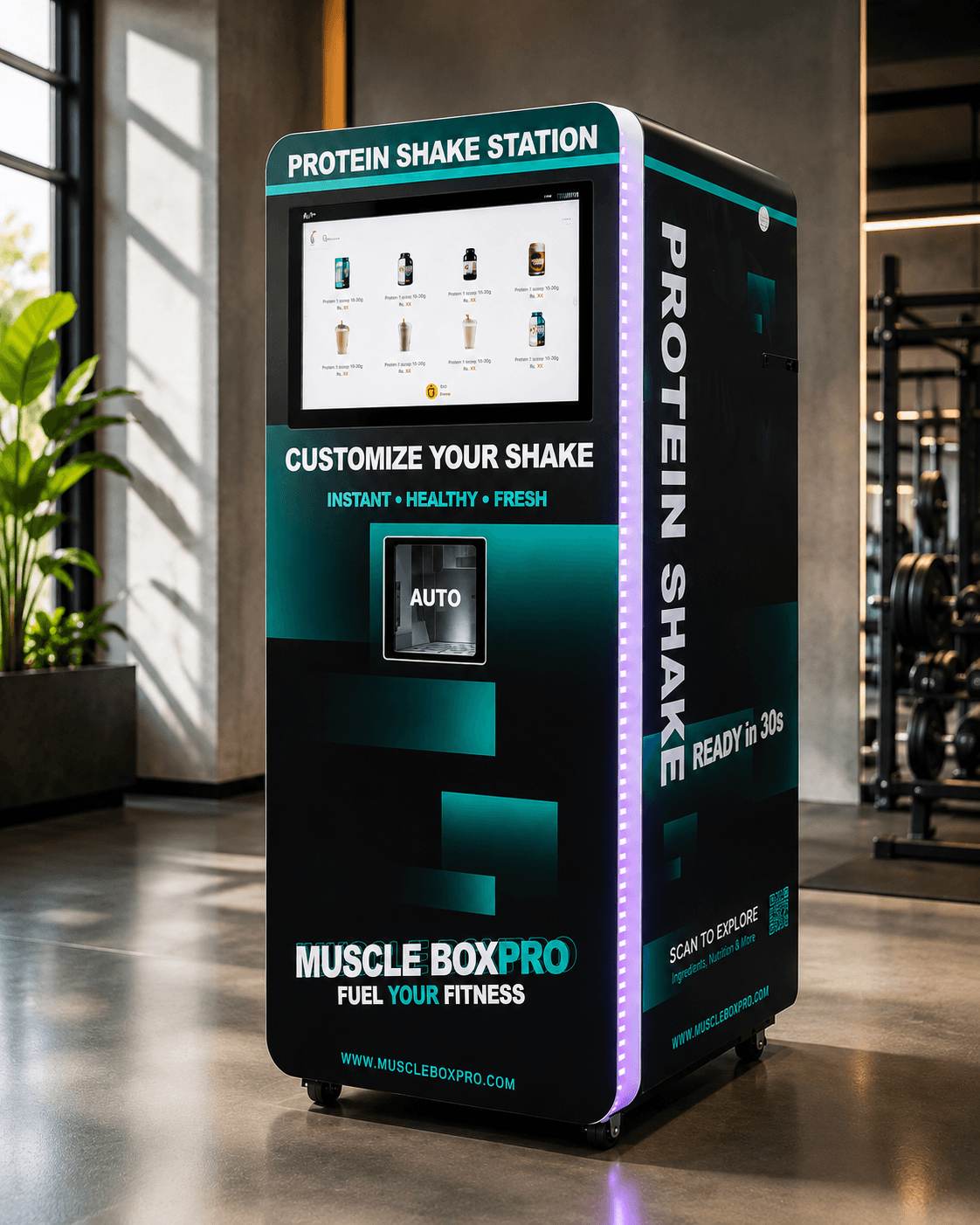
Retention is the single most expensive problem in the Indian fitness industry. Gyms spend thousands acquiring a new member only to watch 50% of them cancel within 90 days. Equipment upgrades, class variety, and pricing rarely solve it. The answer, for a growing number of gym owners, is hiding in plain sight: on-site post-workout nutrition.
1. India's gym retention problem is structural
The Indian fitness market is growing at roughly 16–18% annually yet member churn remains stubbornly high across tier-1 and tier-2 cities alike. New members join with strong intent in January and September, then quietly disappear by month three. The most common reason cited in exit surveys is not cost, not inconvenience, and not a lack of time it is the failure to see results.
Members who do not recover well between sessions feel perpetually fatigued, plateau early, and eventually stop showing up. Gym owners who solve the recovery equation reduce churn dramatically. On-site nutrition is the most direct lever available.
Retention Insight
MuscleBoxPro partner gyms report that members who purchase a shake on-site at least twice per week show a 30–40% higher retention rate at the six-month mark compared to non-purchasers. The shake purchase is both a result and a reinforcer of the gym habit. (MuscleBoxPro internal partner data, Q1 2026.)
2. The science: nutrition closes the habit loop
Behavioural science identifies three components of a habit: a cue, a routine, and a reward. For gym attendance, the routine (training) is well established but the reward is weak and delayed. Muscle growth takes weeks. Fat loss takes months. Without a short-term, tangible reward, the habit loop fails to reinforce itself.
A post-workout protein shake delivers an immediate, satisfying reward: a cold, flavourful drink that the body recognises as recovery fuel. Dopamine responds to the sensory satisfaction, the sense of having completed a wellness ritual, and over time the visible physical results that adequate protein intake accelerates.
By making this reward available and effortless at the point of greatest motivation immediately post-workout gyms actively strengthen the habit loop for every member who uses the machine. The anabolic window research reinforces this: protein consumed within 30–45 minutes of training maximises muscle protein synthesis, driving the faster results that keep members motivated.
3. The friction problem: why members don't bring their own
Gym owners often assume that members who want protein will bring a shaker. The reality is messier: carrying powder, measuring servings, filling a bottle with gym water, and cleaning the shaker at home is a routine that fewer than 20% of recreational gym-goers maintain consistently. For the other 80%, post-workout nutrition is a sporadic, inconvenient afterthought.
Removing this friction entirely replacing it with a 10-second tap-and-pay interaction that produces a chilled, freshly blended shake changes behaviour at scale. Members who previously skipped post-workout nutrition start fuelling consistently. Recovery improves. Results appear faster. They renew their membership. See our guide on the best post-workout protein shakes for more on what makes the optimal recovery drink.
4. On-site nutrition as a daily touchpoint
Every interaction a member has with your gym outside of the workout itself strengthens their identity as a gym-goer. The purchase of a post-workout shake is one of those interactions a micro-ritual that takes 60 seconds but signals to the member's own mind: "I am someone who takes my recovery seriously."
Gyms that install an automated protein dispenser report that the machine becomes a social hub in its own right. Members wait together for their shakes, discuss flavours, and compare results. These small social bonds are a well-documented driver of gym retention in the Indian market, where community and belonging rank highly in member satisfaction surveys.
5. Measurable retention benefits for gym owners
- Higher 90-day retention: Members who adopt a post-workout nutrition habit churn less in the critical first three months
- Stronger renewal rates: Visible results from consistent protein intake correlate with membership renewals at the 6-month and 12-month marks
- Increased visit frequency: A reason to stay post-workout increases average session length and daily visit rate
- Word-of-mouth referrals: Members who see results talk a machine that helps them look better becomes a referral driver
- Premium perception: On-site nutrition signals that your gym invests in member outcomes, justifying higher membership fees
6. The economics: retention vs. acquisition
Acquiring a new gym member in India costs between ₹800–₹2,500 in marketing and promotional spend, depending on the city and channel. Retaining an existing member for an additional six months has a marginal cost close to zero but generates the same (or higher) revenue as the acquisition. The maths is straightforward: a 10% improvement in retention is worth more than a 10% increase in new sign-ups.
An automated protein machine from MuscleBoxPro costs the gym nothing to install or maintain. It generates passive shake revenue, typically ₹3,000–₹12,000 per month as the gym's revenue share (total machine revenue ranges from ₹15,000–₹70,000+ depending on footfall and shake volume), while simultaneously nudging members toward faster results and stronger attendance habits. The return on investment is not just financial. It is compounded through the retention it drives.
Dual Revenue Impact
A gym retaining 20 additional members per quarter (at ₹1,500/month average fee) generates ₹30,000/month in incremental membership revenue directly attributable to improved outcomes and the habit reinforcement that on-site nutrition provides. Combined with passive shake revenue, the total impact of one machine installation often exceeds ₹40,000–₹50,000/month. (MuscleBoxPro internal partner data, Q1 2026.)
7. Implementation: what gym owners need to know
The most common concern gym owners raise is floor space. A MuscleBoxPro machine requires less than 10 square feet less than the space occupied by two benches. Ideal placement is near the gym exit, where members pass naturally after their final set, during the highest-intent window for a shake purchase.
Installation is handled entirely by MuscleBoxPro. The machine connects to a standard power outlet, integrates with UPI and card payments, and begins operating within hours of placement. Restocking is managed by MuscleBoxPro on a scheduled basis based on usage data the gym owner is never responsible for inventory. For more details on machine specifications, see the MuscleBoxPro machine overview.
Frequently asked questions
What is the average gym member retention rate in India?
Industry estimates suggest that Indian gyms retain roughly 40–55% of new members past the three-month mark significantly lower than the global benchmark of 70–75%. Post-workout nutrition accessibility is one of the controllable factors that can move this number upward.
How does on-site nutrition directly improve retention?
When members can refuel immediately after training, they experience better recovery and faster visible results. Seeing progress is the single strongest motivator to keep coming back. An automated protein dispenser removes the friction that otherwise interrupts this habit loop.
Do members actually use an on-site protein machine regularly?
Yes. MuscleBoxPro partner data shows that gyms with an installed machine see repeat purchases from the same member 3–5 times per week on average creating a daily touchpoint that reinforces the gym habit itself.
Is an automated protein machine expensive to install?
MuscleBoxPro offers a zero-upfront-cost model. The machine is installed for free; the gym earns passive revenue per shake sold. There are no staffing, maintenance, or inventory costs for the gym owner.
Retain more members starting today
Install a MuscleBoxPro machine at zero cost and give your members the post-workout fuel that keeps them coming back and renewing.